Facial Procedures
- A neck and face lift is a procedure whereby your facial muscles are tightened or stretched and the removal of excesses fat from the neck and face, to give the patient a more youthful look. A neck and face lift can be done independently, but they are commonly done in one procedure.
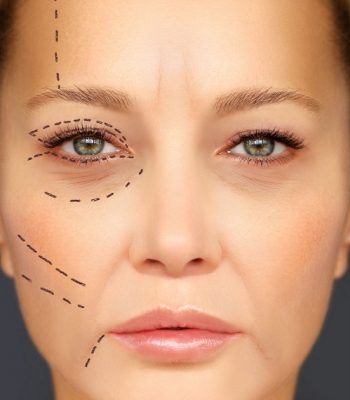
How are they performed - A traditional face lift incision: The incision begins in the hairline above the temple and continues behind the ears until it reaches the lower scalp. In cases where a neck lift is required this will include an incision under the chin.
- A limited incision: Is similar to a traditional one, however it does not proceed to the lower part of the scalp.
What are the advantages? - A neck and face lift will help modify age related changes that occur the older we get, such as sagging, decreased elasticity and fat composition changes in the face and neck. The appearance of other features may also improve such as the folds of the sides of the nose and mouth.
A brow and forehead lift corrects the flowing:
- Creases in the forehead.
- Hooding of the upper eyelids
- Sagging of eyebrows
These corrections are achieved by removing or raising the muscle tissue or skin in the forehead region. This muscle tissue or skin is responsible for wrinkles/deep frown lines and any drooping.
How is this procedure performed? There are two primary procedures:
- The classical (coronal) lift: An incision is made in the forehead area extending from one ear to the other. In other cases, it is done in the hairline to to deal with the correction of issues with a high forehead (a large space between the top of the head and the eyebrows).
- The endoscopic lift:
This is a less invasive method in which smaller incisions are made in the forehead to pass through a thin tube mobilized with a camera to view the tissue and muscle. Simultaneously another device is placed through another incision to make the alterations.
What are the advantages?
- The forehead is given a more refreshed look.
- Improvement of the appearance of frown lines.
An eye lift is a procedure that aims to correct deformities, defects, the sizes of the eyelids and to aesthetically modify the eye region of the face. This may involve the removal of excess fat, skin or muscle both in the upper and lower lid of the eye.
How is it performed?
An eye lift can be done on both the upper and lower lid:
- On the upper lid an incision is made along the folds of the eyelids to extract the excess skin, fat or muscle.
- On the lower lid an incision is made underneath the lashes in the natural crease.
Other eyelids problems such as an eyelid that droops excessively affecting a patient’s vision may require an additional procedure called Ptosis (this provides additional support to the eyebrow muscle).
What are the advantages?
- Improvement of baggy/droopy upper eyelids.
- The removal of any excess skin that may interfere with peripheral vision or result in any other eye difficulties.
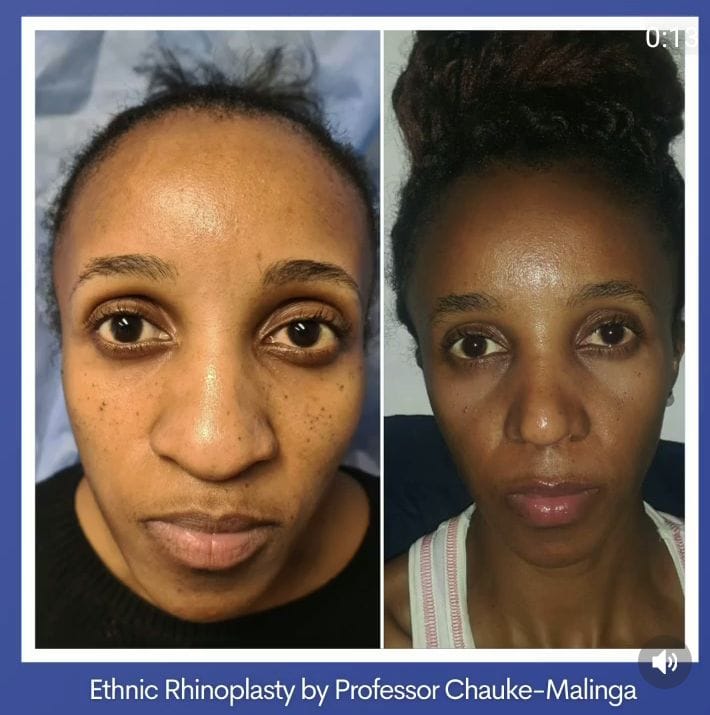
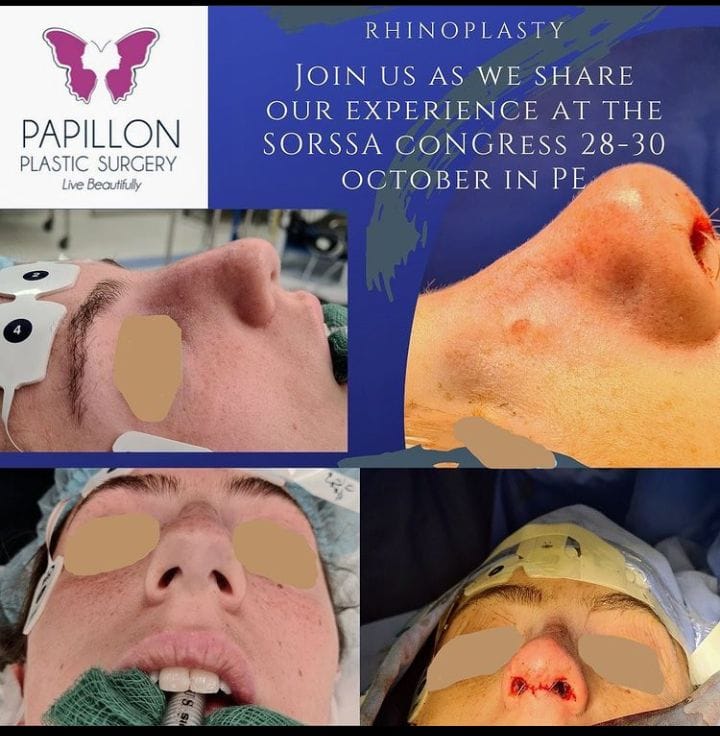
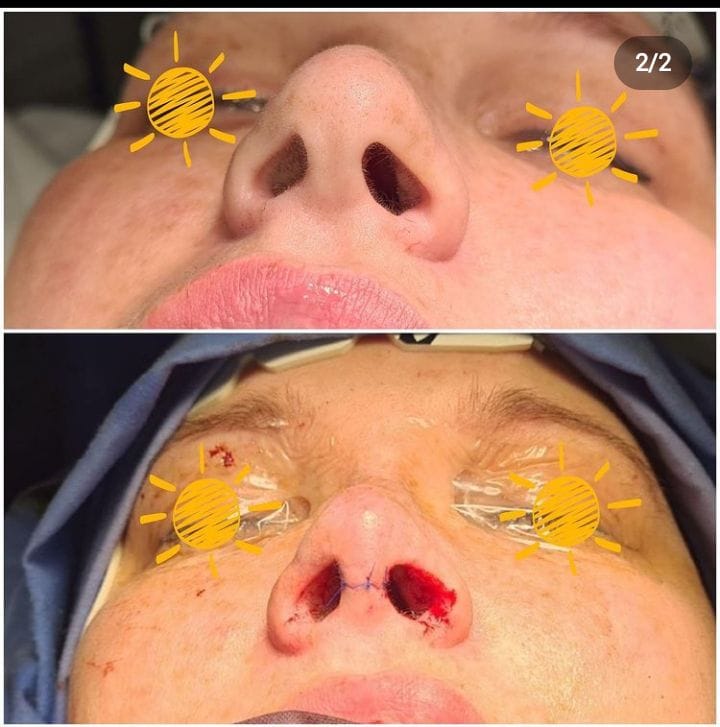
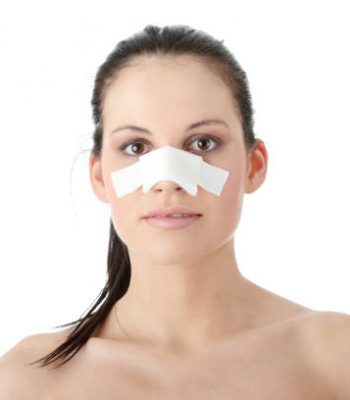
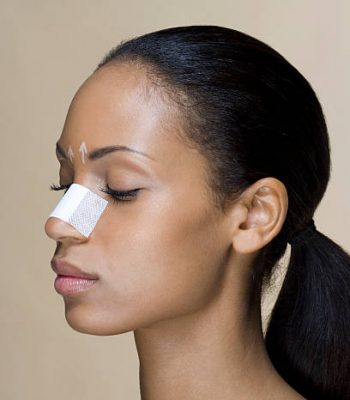
A rhinoplasty is a procedure aimed at correcting and reconstructing the nose. The motivation behind rhinoplasty can be characterized as reconstructive surgery and cosmetic surgery , as it is focused on the alteration of either the bone, cartilage, skin or all three.
How is this procedure performed?
It is highly dependent on the area of the nose that requires alterations resulting in a tip only or full rhinoplasty.
- Tip only rhinoplasty: This procedure is done to improve the shape or look of the nose to deal with issues such as any drooping, asymmetry, a bulbous tip and a hanging columella.
Full rhinoplasty: A full rhinoplasty modifies the bone and cartilage in the nose through an incision made at the base of the nose. Cartilage and bone may be utilized from other parts of the body to meet the desired look. For the purpose of improving a patient’s breathing a Septoplasty can be performed to straighten the nasal septum (the
wall dividing the nasal passage into a left and right side).
What are the advantages?
- Aids breathing difficulties.
- Slight changes can improve the look of the nose.
- Can improve the disruption of snoring.
- Deals with injuries such as a broken nose.
- Improves confidence as it can provide an aesthetical identity
A lip enhancement is also commonly known as a ‘lip augmentation’it is a surgical or non-surgical procedure that aims to change the appearance of the lips by altering the shape, structure and volume of the lips thus creating lips that are visually fuller.
How is it performed?
There are a variety of methods that can be used to achieve a desired look and feel such as:
- Lip fillers: Are often made from injectable dermal substances (which are taken from the patient’s skin) that can be absorbed by the body at a quicker rate than others such as hyaluronic acid and collagen. These are then injected either in your lips or around the mouth.
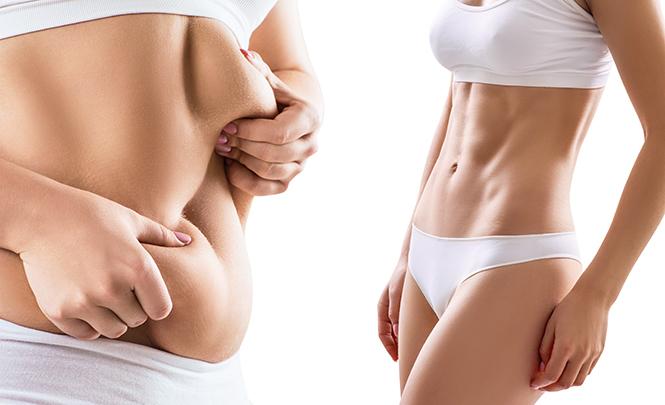
- Fat grafting/transfer: This is done through the harvesting of fat from other parts of the body such as the abdomen; it is then purified and then injected into the lips.
- Lip implants: Are used as an alternative to temporary lip fillers.
Once the lips are anesthetized and sterilized a cut is made in the corners of the mouth to create a tunnel the shape of the lip which is then used to insert the implant.
What are the advantages? - Patients are able to see the results right away.
- With lip filler the amount of substance inserted can be controlled, and the treatment can be supplied in gradual doses over a specific time.
- Certain types of Lip implants are solid and therefore are less prone to leaking or rupturing.
- Fat grafting/transfer often last for 5 years or longer at the most.
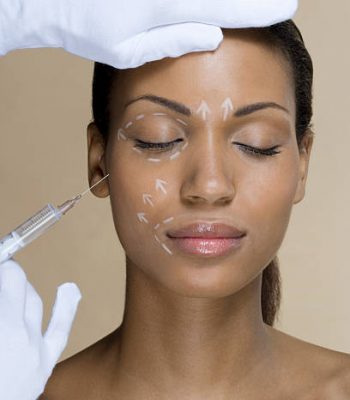
Fat injections can also be referred to as ‘autologous fat transportation’ that uses body fat as a filler agent. This is done to re-contour the face, reduce frown lines, crow’s feet, smile lines (nasolabial folds), and to give definition to the cheeks and chin. Fat injections can also be used in other parts of the body to fill
depressed scarred areas.
How is it performed?
A donor site (where the fat will be extracted) and a treatment site (the body part receiving the filler) need to be located. These sites are then both injected with a local anesthetic, and then an IV (intravenous fluid) is injected into the donor site only to facilitate fat collection. The fat is then processed to remove unwanted
fluids and is injected into the treatment site in multiple thin strands.
What are the advantages?
- It is natural; non allergic.
- Injections may last for several months.
- Little to no downtime.
- Usually no pre-testing required because the fat is from the patient’s body.